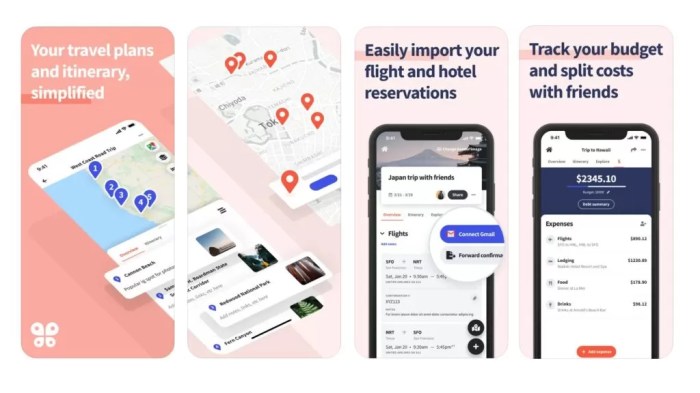
Planning a trip often involves juggling flights, accommodation, activities, and of course, the budget. The sheer number of expenses can quickly become overwhelming, but thankfully, technology offers a helping hand. Travel budgeting apps are designed to streamline the process, offering features to track spending, set budgets, and even find travel deals. This exploration delves into the world of these apps, examining their functionalities, key features, and how they can help you make the most of your travel funds.
From simple expense trackers to sophisticated budgeting tools, these apps offer a variety of features catering to different travel styles and needs. We’ll compare popular options, highlighting their strengths and weaknesses, and providing insights into selecting the perfect app for your next adventure. Beyond expense tracking, we’ll also consider how these apps can integrate with other travel planning aspects, ensuring a smooth and financially responsible journey.
Top Travel Apps for Expense Tracking and Budget Management

Planning a trip often involves juggling flights, accommodation, and countless other expenses. Efficient budget management is crucial for a stress-free and enjoyable travel experience. Thankfully, numerous mobile applications are designed to simplify this process, offering robust features for tracking expenses and managing budgets effectively. This section will explore some of the leading apps in this category.
Popular Travel Expense Tracking and Budget Management Apps
Choosing the right app depends on individual needs and preferences. Below is a table comparing several popular options, highlighting their key features, pricing models, and user ratings (where available). Note that user ratings are dynamic and can change over time.
| App Name | Key Features | Pricing | User Rating (Example) |
|---|---|---|---|
| Trail Wallet | Expense tracking, currency conversion, budget alerts, report generation, offline functionality. | Free (limited features), Premium subscription available. | 4.7 stars (Example) |
| TripIt | Itinerary management, expense tracking, integrates with other travel services, shared trip planning. | Free (basic features), Pro subscription available. | 4.5 stars (Example) |
| Expensify | Expense reporting, receipt scanning, mileage tracking, integrates with accounting software. More business-focused. | Free (limited features), paid plans for teams and businesses. | 4.2 stars (Example) |
| Wallet | Simple expense tracking, budget setting, category management, basic reporting. | Free | 4.0 stars (Example) |
| Goodbudget | Budgeting based on the envelope system, expense tracking, cloud syncing, multiple user accounts. | Free (limited features), paid subscription available. | 4.6 stars (Example) |
Comparison of Three Leading Travel Expense Tracking Apps
Trail Wallet, TripIt, and Expensify represent different approaches to travel expense management. Trail Wallet excels in its straightforward expense tracking and offline capabilities, making it ideal for travelers with limited internet access. TripIt, while also offering expense tracking, focuses more broadly on itinerary management and integration with other travel services. Expensify is geared towards business travelers, prioritizing features like receipt scanning and integration with accounting software.
Trail Wallet’s strength lies in its simplicity and offline functionality; however, it lacks the advanced features found in Expensify. TripIt’s strength is its comprehensive itinerary management, but its expense tracking features are less robust than Trail Wallet’s. Expensify, while powerful for business users, may be overkill for casual travelers.
Hypothetical Travel Itinerary and Expense Tracking with Trail Wallet
Let’s consider a five-day trip to Paris. The hypothetical budget is $1500. Using Trail Wallet, the user would first create a new trip, naming it “Paris Trip.” They would then set a budget of $1500.A screenshot description: The app’s main screen shows the “Paris Trip” with a budget of $1500 and a running total of expenses.Throughout the trip, expenses are logged daily.
For example, a $50 dinner would be recorded under “Dining,” and a $30 museum ticket under “Activities.”A screenshot description: A detailed expense breakdown is shown, categorizing expenses by type (e.g., Accommodation, Food, Transportation, Activities, etc.). Each entry shows the date, description, and amount.At the end of the trip, the app generates a summary report. This report would show the total spent against the budget, highlighting any overspending or remaining funds.
It might also visually represent the expenses by category using charts or graphs.A screenshot description: A summary report is displayed, showing a pie chart of expense categories, a bar graph of daily spending, and a final balance comparing the total spent to the budget. The report also provides a downloadable version.
Features to Look for in a Travel Budgeting App
Choosing the right travel budgeting app can significantly impact your trip’s success. A well-designed app simplifies expense tracking, facilitates better financial planning, and ultimately reduces stress. Consider these key features to ensure you select an app that meets your needs.
Selecting the right travel app is crucial for a smooth and financially responsible trip. Several features are essential to ensure a positive user experience and effective budget management. Below are five key features to consider.
Essential Features of Travel Budgeting Apps
- Intuitive Interface and Ease of Use: The app should be user-friendly, allowing for quick and easy input of expenses. Complex navigation or confusing features can lead to frustration and decreased usage. A clean design with clear categorization options is paramount.
- Multiple Account and Currency Support: Many travelers use multiple credit cards or bank accounts. The ability to link these accounts and track expenses in various currencies is crucial for accurate budgeting. This simplifies reconciliation and provides a comprehensive view of spending across different payment methods.
- Robust Reporting and Visualization Tools: The app should provide clear and concise reports summarizing your spending. Visualizations like charts and graphs can offer valuable insights into spending patterns, helping you identify areas where you might be overspending. Detailed reports can also be useful for tax purposes.
- Offline Functionality: Reliable internet access isn’t guaranteed everywhere, especially when traveling internationally. An app with offline capabilities allows you to continue tracking expenses even without a data connection. This ensures continuous monitoring of your budget regardless of location.
- Budgeting and Goal Setting Tools: Effective budgeting requires setting realistic goals. The app should allow you to create budgets for different categories (accommodation, food, activities, etc.) and set overall spending limits. Alerts or notifications when approaching budget limits provide timely warnings to avoid overspending.
Security and Privacy in Travel Budgeting Apps
Security and privacy are paramount when using any app that handles financial data. Travel budgeting apps often store sensitive information like credit card details and transaction history. Unauthorized access could lead to identity theft or financial loss. Users should look for apps that utilize robust encryption protocols (like SSL/TLS) to protect data during transmission and storage. Multi-factor authentication adds an extra layer of security, making it harder for unauthorized individuals to access accounts.
Regularly reviewing the app’s privacy policy is essential to understand how your data is collected, used, and protected. Choosing reputable apps from well-established developers minimizes risks.
Common Pitfalls When Using Travel Budgeting Apps
- Inconsistent Data Entry: Failure to regularly input expenses can lead to inaccurate budget tracking. Solutions include setting reminders or utilizing automated expense tracking features (where available) to ensure consistent data entry.
- Overreliance on Estimated Costs: While estimating expenses is sometimes necessary, over-reliance on estimates can lead to inaccurate budgeting. Aim to track actual expenses whenever possible to maintain accuracy. Regularly reviewing and adjusting your budget based on actual spending helps maintain control.
- Ignoring Unexpected Expenses: Unforeseen costs (e.g., medical emergencies, flight delays) can significantly impact a budget. Building a contingency fund and incorporating a buffer into your budget plan helps absorb these unexpected expenses and prevent budget overruns.
Integrating Travel Deals and Other Travel Planning Aspects
Effectively managing a travel budget requires more than just tracking expenses; it involves proactively seeking out cost savings and integrating various planning elements. This section explores strategies for incorporating travel deals, insurance, and essential planning considerations into your budget management app for a more holistic approach to travel finance.Integrating travel deals and other travel planning aspects into your chosen budgeting app streamlines the entire travel planning process, allowing for better financial control and a more enjoyable trip.
This involves a multi-faceted approach, combining deal-finding strategies with careful consideration of potential unforeseen costs.
Integrating Travel Deals into Budgeting Apps
A well-structured travel budgeting app should facilitate the easy input of flight and accommodation costs sourced from various platforms. This allows for a comprehensive overview of your spending, even if bookings originate from different websites. Below is a step-by-step guide illustrating this process:
- Identify a suitable budgeting app: Choose an app with features allowing manual entry of expenses and ideally, the ability to categorize transactions (e.g., flights, hotels, activities).
- Find travel deals: Use websites like Skyscanner, Google Flights, Kayak, Booking.com, Expedia, etc., to find deals on flights and accommodations. Take screenshots or copy booking confirmation details.
- Input the details: Manually enter the cost of each booking into your budgeting app, categorizing it appropriately. Some apps may allow you to import data from your email or bank statements, but manual entry ensures accuracy and allows for immediate budget updates.
- Track remaining budget: Regularly monitor your budget to ensure you stay within your limits. The app should provide real-time updates on your spending and remaining funds.
- Adjust budget as needed: If you find unexpectedly good deals, you can adjust your budget accordingly. If you go over budget, identify areas where you can cut back.
Travel Insurance and its Budgetary Impact
Travel insurance is often overlooked but can significantly impact overall travel expenses. While the cost of the insurance itself needs to be factored into the initial budget, the potential savings from coverage can outweigh this initial investment. For example, comprehensive travel insurance can cover medical emergencies, trip cancellations, lost luggage, and other unforeseen circumstances, preventing potentially substantial additional costs.
Including a line item for travel insurance in your budget is crucial for responsible financial planning.
Travel Essentials and Gadget Influence on Budgeting
Packing lists and travel gadgets can directly influence your travel budget. A well-planned packing list minimizes the need for impulse purchases while traveling, saving money on unnecessary items. Similarly, choosing cost-effective travel gadgets (a portable charger instead of multiple chargers, for instance) can lead to long-term savings. Consider creating a spreadsheet within your budgeting app or a separate document linked to it to itemize the cost of essential items and gadgets, ensuring they’re factored into your total budget.
Impact of Travel Blogs and Destinations on Budgeting
Travel blogs and destination-specific information significantly influence the accuracy and realism of travel budgets. By providing firsthand accounts and detailed cost breakdowns, these resources allow travelers to anticipate expenses more effectively, avoiding common budgeting pitfalls and promoting a more financially sound trip. Access to this information empowers travelers to make informed decisions about their spending priorities.Travel blogs offer a wealth of information that goes beyond official tourism websites.
They often include detailed accounts of local prices for food, transportation, and activities, providing a more nuanced understanding of the actual cost of living in a specific destination. Real-life experiences shared by bloggers, including unexpected expenses, help travelers create more comprehensive and realistic budgets. Furthermore, blogs often highlight free or low-cost activities, enabling travelers to maximize their experience without exceeding their budget.
This granular level of detail is invaluable in crafting a budget that aligns with both the traveler’s financial capabilities and their desired travel style.
Budgeting Strategies for Different Travel Styles
Budgeting strategies vary considerably depending on the type of travel. Backpacking, for instance, prioritizes affordability and emphasizes cost-cutting measures, while luxury travel focuses on high-end experiences and prioritizes comfort and convenience, accepting significantly higher expenses. Understanding these differences is crucial for creating a budget that reflects the chosen travel style.
| Aspect | Backpacking | Luxury Travel |
|---|---|---|
| Accommodation | Hostels, budget guesthouses, camping | High-end hotels, resorts, private villas |
| Food | Street food, local markets, self-catering | Fine dining restaurants, exclusive culinary experiences |
| Transportation | Public transport, walking, cycling | Private car hire, first-class flights, private transfers |
| Activities | Free or low-cost activities like hiking, exploring local markets | Exclusive tours, private guides, premium access to attractions |
| Budget Example (per day) | $30 – $50 | $500 – $1000+ |
Sample Budget: A Week in Kyoto, Japan
This sample budget illustrates a mid-range trip to Kyoto, Japan, balancing cultural experiences with cost-effectiveness. It assumes a solo traveler but can be adjusted for groups. Prices are estimates and may vary depending on the season and specific choices.
| Expense Category | Daily Estimate | Weekly Total |
|---|---|---|
| Accommodation (Mid-range hotel) | $80 | $560 |
| Food (Mix of local restaurants and street food) | $50 | $350 |
| Activities (Temples, gardens, day trips) | $40 | $280 |
| Transportation (Public transport, occasional taxis) | $20 | $140 |
| Miscellaneous (Souvenirs, snacks, etc.) | $10 | $70 |
| Total Weekly Budget | $200 | $1400 |
Mastering the art of travel budgeting is crucial for a stress-free and enjoyable trip. By leveraging the power of dedicated travel apps, you can gain valuable control over your finances, ensuring your funds are allocated effectively. This guide has provided an overview of essential features, popular applications, and practical strategies for integrating various travel planning elements into your budget.
Remember, responsible financial planning is key to unlocking unforgettable travel experiences, and the right app can be your trusted companion on this journey.
Clarifying Questions
What if I forget to log an expense?
Most apps allow for manual entry of expenses at any time, even after the fact. Some may offer features to categorize expenses based on location or time stamps, making it easier to catch missed entries.
How secure is my financial data in these apps?
Reputable apps utilize robust security measures, including encryption and secure payment gateways. However, it’s always wise to review the app’s privacy policy and security features before using it.
Can I use these apps for business travel expenses?
Many apps offer features suitable for business travel, allowing for expense reporting and integration with accounting software. However, always check the app’s capabilities to ensure they meet your specific business needs.


